
How do I balance caring personally with challenging directly?
Lead

Radical Candor for New Managers

Balancing personal care with direct challenge helps new managers avoid the traps of sugar-coating or harshness, enabling them to build high-performing teams through clear expectations, behavioral feedback, and continuous improvement using Kim Scott’s Radical Candor framework.


How do I survive 30+ hours of weekly meetings?
Build

Calendar Defense 101: Triage for Overwhelmed Leads

Managing a bloated calendar requires moving from reactive participant to proactive owner by running a daily triage to eliminate fluff, blocking focus time, mastering polite refusals, delegating meetings, replacing status connects with direct emails, and running monthly audits to ensure your schedule stays lean enough for real leadership.

How do I visualize how work actually gets done vs. how it should get done?
Optimize

Current State vs. Future State Process Mapping

Process mapping deconstructs complex operational workflows into basic schematic symbols to clearly visualize your current “As Is” reality, identify bottlenecks like waiting times and manual steps, and eliminate low-value tasks, enabling first-time managers to establish streamlined “To Be” processes and execute smooth team transitions through small-scale pilot testing.

How do I prevent people from gaming the numbers I track?
Measure

Goodhart’s Law: When Metrics Backfire

When metrics shift from business indicators to strict targets tied to rewards or penalties, employees often game the numbers – creating a deceptive “watermelon effect” where dashboards appear green while actual outcomes collapse – which leaders can prevent by pairing quantity with quality guardrails, stress-testing new metrics through pre-mortems, and leading with context rather than enforcing rigid numerical goals.

Communicating Big-Picture Context to Daily Tasks
Lead

Communicating Big-Picture Context for Daily Tasks

By connecting repetitive tasks to company goals, using the WHY framework, aligning individual KPIs with strategy, demonstrating cross-departmental impact, and using authentic storytelling, leaders can help their teams understand the broader purpose behind their daily work, boosting engagement, motivation, and overall performance.

How do I track all my own deliverables without losing focus?
Build

The Manager’s Personal Task Organization System

Transitioning from an individual contributor to a people manager requires adopting a structured personal task organization system – such as Kanban boards, daily prioritization routines, capture systems, and delegation tracking – to prevent the overwhelming chaos, missed deadlines, high stress, and long-term team burnout caused by carrying over unstructured habits into leadership responsibilities.

The Pareto Principle (8020 Rule) in Operations
Optimize

The Pareto Principle (80/20 Rule) in Operations

The Pareto Principle, or 80/20 Rule, helps operational managers isolate the vital few root causes behind the majority of daily issues by systematically gathering process data, sorting categories by impact, and building a cumulative chart – enabling focused, high-impact fixes, proper Root Cause Analysis, and long-term performance tracking while avoiding constant firefighting and keeping team momentum high through visible wins.

Establishing Accurate Operational Baselines
Measure

Establishing Accurate Operational Baselines

To establish accurate operational baselines and realistic targets, first-time managers must clean their data, filter out abnormal outliers, and separate distinct workflows; they can then determine team capacity using the median as the baseline – supported by 25th and 75th percentile target bands and capability analysis – to safely improve performance by streamlining processes rather than arbitrarily shifting goalposts.

The Corporate Bite Mission
Lead

My Mission

I started The Corporate Bite because I wanted to build the resource I desperately needed when I first stepped into management: a source of direct, practical, and unvarnished advice written by someone who is still in the thick of it.

The Corporate Bite
Build

The Corporate Bite First-Time Manager New Joiner Plan

The Corporate Bite New Joiner Plan is a practical, down-to-earth roadmap designed to guide first-time managers through their crucial first year. Divided into four core pillars – Build, Lead, Measure, and Optimize – it equips you with essential, real-world tools to master day-to-day operations, lead people with confidence, leverage data effectively, and drive continuous operational efficiency without unnecessary corporate jargon.

How do I give immediate course-correcting feedback without defensiveness?
Lead

The SBI Feedback Model: Situation, Behavior, Impact

The SBI Feedback Model helps managers deliver immediate, course-correcting, or positive feedback without defensiveness by deconstructing real-time conversations into three factual, objective layers: the specific Situation (the anchor), the observable Behavior (the camera angle), and the real-world Impact (the ripple effect), ensuring clear alignment, honest communication, and actionable next steps without subjective assumptions or emotional friction.

How do I evaluate current team capabilities and gaps?
Build

Conducting Your First Team Audit

This ISO 9001:2015-based team audit framework helps first-time managers evaluate operational readiness across seven key areas – Context, Leadership, Planning, Support, Operation, Performance Evaluation, and Improvement – enabling them to systematically review processes against required evidence, identify operational gaps, score compliance levels, and establish root-cause actions to drive continuous improvement, team efficiency, and consistent service delivery.

How do I brainstorm root causes when a problem has multiple drivers?
Optimize

Fishbone Diagrams (Ishikawa) for Complex Issues

By combining cross-functional expertise, open-ended problem statements, and the structured 6 Ms framework, first-time managers can use Fishbone diagrams to depersonalize root-cause analysis, separating surface-level symptoms from underlying system failures, while 5 Whys techniques, stakeholder voting, and Pareto analysis help pare down complex operational issues into vital, actionable priorities that ensure clear team ownership and measurable accountability.

Which 3 to 5 metrics should my team live and die by?
Measure

Defining Your Team’s Core KPIs

To avoid decision paralysis from severe metric overload, new managers must filter out vanity and counterproductive metrics to establish three to five core KPIs using the “So What?” test, set living baseline targets that protect against team burnout, and clearly connect daily frontline operations directly to broader organizational goals.

How do I motivate people without giving generic 'good job' feedback?
Lead

Delivering Actionable Praise and Recognition

Generic praise like “good job” breeds confusion, favoritism, and cynicism by devaluing real effort, so first-time managers must deliver specific, actionable recognition – using the action, context, and impact formula – while tailoring delivery to individual preferences, providing immediate feedback separate from criticism, linking individual wins to broader business goals, and building intentional recognition habits to genuinely motivate and inspire their teams.

Navigating HR as a First-Time Manager
Build

Navigating Corporate HR Systems

Mastering HR basics is essential for new managers relying on simple tools like Excel. Start by tracking attendance, working hours, and leave. Plan team capacity and workload using historical volume trends and standard metrics. Stay compliant by tracking required team trainings, review past performance carefully, and keep consistent 1-on-1 feedback notes. Finally, schedule dedicated admin time and collaborate closely with your HR Business Partner to stay organized.

Asking 5 Why until you reach the actual root cause
Optimize

Mastering the 5 Whys (And Knowing When to Stop)

The 5 Whys tool helps leaders solve problems by targeting underlying processes rather than surface symptoms or assigning blame. A great 5 Whys analysis shifts from reactive quick fixes to finding true root causes. By using objective data, involving team members, and focusing on controllable processes, you can turn insights into small, lasting fixes that build an open culture of learning from mistakes.

Vanity Metric Example - trending chart that is not saying much
Measure

Vanity Metrics vs. Actionable Metrics

To drive real business value, new managers must ditch flattering vanity metrics and focus on actionable ones by passing the three-part test ensuring data drives specific decisions, has clear causality, and offers fast feedback, while auditing dashboards to align two to three core metrics with departmental goals and asking “So what?” before tracking any new number.

Manager not listening to the team as they should
Lead

The Art of Active Listening in Management

To truly master active listening as a manager, you must deliberately hold back your immediate urge to solve every problem, tuning into non-verbal emotional cues and what remains unsaid. By mirroring their thoughts back and validating their feelings without defensiveness or dismissal while remaining fully present, distraction-free, and comfortable with quiet pauses you transform routine check-ins into safe spaces where your team feels deeply understood and genuinely supported.

Build

Corporate Jargon: A First-Time Manager’s Guide

Ever looked at a workplace email and felt like you needed a secret service decoder ring just to read it? From EOB and OOO to KPIs and P&L, corporate language can feel like an overwhelming jungle for a new manager. Here is your down-to-earth guide to the top 20 business acronyms, what they actually mean, and how to navigate them without losing your sanity.

Optimize

The PDCA (Plan-Do-Check-Act) Cycle Explained

Most leaders default to massive, disruptive operational overhauls when trying to fix broken team processes – only to watch them fail. The Plan-Do-Check-Act (PDCA) cycle offers a low-risk alternative: testing small, controlled changes before rolling them out wide. Learn how this classic framework originated, why dragon-slaying hero complexes backfire in management, and how to run a simple pilot to improve your frontline operations without breaking daily workflow.

Measure

Leading Indicators – Lagging Indicators

Drowning in dashboards and new data points during your first week as a manager? You’re not alone. Most new leaders get trapped in “rearview mirror” management – focusing strictly on past outcomes instead of predicting future performance. Discover how pairing leading inputs with lagging outputs can help you build a predictable strategy, mitigate risks, and steer your team toward consistent success without losing your mind in the process.

Lead

The Ethics of Leadership: Handling Sensitive Info

When you step into a leadership role, no one prepares you for the heavy burden of keeping corporate secrets. From upcoming layoffs to confidential reorgs, holding sensitive information without breaking trust – or losing your mind – is one of management’s toughest balancing acts. Learn how to draw clear boundaries, handle point-blank questions when your hands are tied, and rebuild team trust after the news breaks.

Build

Building Psychological Safety on Day One

Building psychological safety isn’t about soft management – it’s about eliminating the fear that keeps your team from reporting mistakes before they explode. When employees feel safe to speak up, own their errors, and challenge ideas without fear of blame, you build a resilient, high-performing culture. Here is how to create a blameless environment and lead with your own mistakes from day one.

Optimize

5S for the First-Time Manager

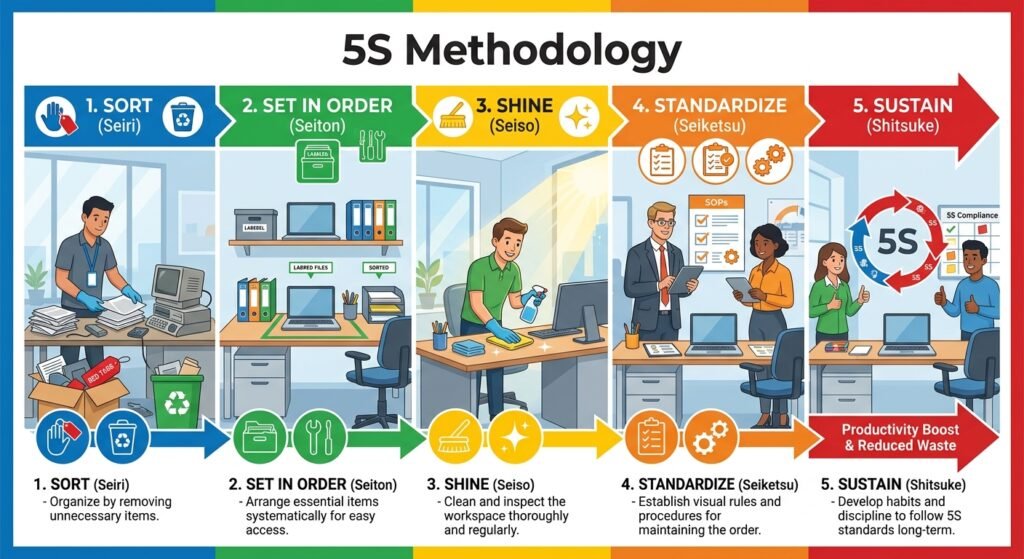
Working with digital chaos – from crowded inboxes to disorganized shared drives – quietly drains your productivity and makes spotting errors nearly impossible. In this guide for first-time managers, learn how to adapt Lean’s 5S methodology (Sort, Set in Order, Shine, Standardize, Sustain) to clear out digital clutter, set up visual workflows, and build an organized team culture without micromanaging.

Measure

Data Analysis Paralysis: What, Why and How

Ever found yourself trapped in a spreadsheet loop with dozens of files, 50 slides, and no clear answer? Data Analysis Paralysis is a common trap for first-time managers, turning straightforward tasks into overwhelming rabbit holes. Learn how to break the cycle, clean your data efficiently, and make confident, action-driven decisions using practical frameworks like EDA and DIG.

Lead

Trust and Credibility: A First-Time Manager’s Struggle

With a staggering 58% of first-time managers receiving zero support or formal training, it is no surprise that many resort to demanding trust and authority. But quiet reliability beats loud authority every single time. Real credibility isn’t claimed overnight – it is built through small, consistent actions, honest communication, and keeping your word.

Build

First-Time Managers Authority Guide

Where does your authority actually start and end as a new manager, and what decisions can you make without constantly asking for permission? Navigating this boundary is what separates true leaders from mere coordinators. This guide breaks down practical frameworks like Decision Zone mapping, dollar limits, and escalation rules to help you confidently take charge, gain your team’s trust, and manage upper management expectations, without getting stuck in bureaucratic limbo.

Optimize

Value Add Activity: First-Time Manager Handbook

When you take over a team that has been running the same processes for years, it’s easy to inherit hidden waste and outdated routines. Learning how to spot Value-Add, Business Value-Add, and Pure Waste is the fastest way to lighten your team’s workload and streamline operations. Here is a practical guide to running the Customer Value Test, eliminating administrative noise, and turning Lean thinking into a daily leadership habit rather than a one-time project.

Scroll to Top