
How do I run a multi-week initiative without dropping the ball?
There comes a time in the life of a first-time manager when they need to break the ice and start doing things they never did before. It’s a long list, but to avoid any panic, let’s take them step-by-step and focus on the moment. One of these ice-breakers you must do is the famous project management. We all heard these words before, but how do they fit into our day-to-day operational life, and equally relevant and important: why do I need to know about it?
When managing people, resources, budget, multitasking, improvement projects, and many other things, it’s really not even about how well you can cope with all of it, it’s more about how good you are with project management. Realistically speaking, you will not be able to maintain for an indefinite amount of time the same level of delivery just by doing things; you will need a structured, well-planned, and tightly followed plan… and this is exactly where the concept will help you. The better you are at it, the faster you will approach the finish line without losing your mind.
What does a first-time manager need to know about project management?
Running a project doesn’t mean losing your mind. First-time managers can tackle multi-week initiatives by mastering basics like scoping, setting up a RACI, breaking down steps, and balancing constraints. Keep communication honest, use a simple tracker, and always circle back to your initial promise.
In this article:
- What exactly is “Success”? (Covering project goals, scoping, and the RACI matrix)
- Make it easy: break it down (Focusing on breaking work into smaller steps using the WWA approach and mapping major phases)
- The Iron Triangle of Constraints (Balancing scope, time, and resources without breaking quality)
- When communication becomes tired, boring and without value (Fixing communication, managing roadblocks, and keeping it human)
- Closing the project (Reviewing the final outcome against the original promise and reflecting on the journey)
What exactly is “Success”?
Before you even begin to fire up that Excel file and start thinking about the next steps, there’s a very important question you must answer: what does success mean for you? Say you have a specific improvement project in mind: you have a basic idea of what you want to do, you start thinking about the team, tools, budget, and all these aspects… but are you clear on what specifically you plan on achieving at the end? It might sound strange, but in reality, there must be no room for unclarity in your mind about what you are planning to do.
With the purpose very clear in mind, it’s time to look left, right, up, and down. Confused? I don’t blame you! This is called scoping, and it’s about the specific boundaries of your project. You see, when we start work on something, we must limit our activity to very specific areas of the overall activity in the department (or company). Because of that, we need to clearly establish what is “in scope” and what is “out of scope.” Think about this like so: where does the project start and end, who are the people involved, what processes are included, any exceptions, etc.
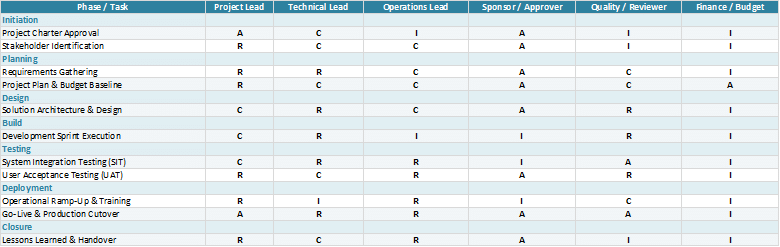
And of course, the list of people and what each must do. Don’t be fooled into thinking that having a tracking sheet of people doing things is counterproductive; this will be the most important file you will ever create in a project plan situation. It’s not just about the file itself, it’s about what it actually represents: you see, before you add any names in it, you must first talk to them and establish and agree on what everyone will be doing. Think about it as a responsibility tracker, or a RACI: Responsible, Accountable, Consulted, and Informed. The roles in a RACI matrix in very simplistic terms are as follows:
- Responsible: the one doing the actual work
- Accountable: the one who approves or owns the specific task or step
- Consulted: the one who provides the inputs
- Informed: the one who must be kept informed
Let’s just assume these are the people that will take part in your improvement project:

With the project steps identified (details in the following chapter), you must map each function to each project step and mark it with the specific RACI, like this:
Make it easy: break it down
Projects are always complicated; they have so many steps, sub-steps, multiple people, timelines, dependencies, delays, changes, updates, and many more. It stands to reason that one might feel very overwhelmed by all of it, especially if they never did it before. To avoid any desire to just drop everything and get out of there, you should just break the work needed into smaller steps, keeping it simple.
Start with the main goal. To achieve it, there’s a long list of steps you need to do, but if you try and think about all of them at once, it can become problematic. Instead, just take a step back and try to mentally visualize the main or bigger steps/stages that will get you there. The best way I usually approach this is by thinking about the WWA: the what, the where, and the action. Let’s take a simple example and say you are preparing to launch a customer newsletter by the end of next month, and see how the WWA would look in this situation:
- The What – this is where you think about the actual content of the newsletter, the sections, drafting a few copies of it, maybe adding some images, etc.
- The Where – who are you sending it to? Get a clear list of all the people that should be receiving it and start thinking about timelines, delivery method, format, etc.
- The Action – it’s about testing it on yourself and then just launching it.
Tackling the goal this way will give you a bit of space to not overthink it and look at the issue, at first, with very simple eyes. From here, it’s easy because you already have a working basic framework; all you need to do now is to build on it.
With the goal clear, it’s now time to think about the major steps – and this is where the actual project management starts to take shape. There are many ways to look at this, but I think the best way I can help you is by providing an example, one that you can also look at and adapt to your own situation. Say we need to design a specific solution, what would the major steps in such a case look like? We would start with Initiation (when we look at a project charter, identify stakeholders, take the needed approvals, etc.), then we go into Planning (where we look at requirements, project plan, budget, etc.), next would be Design (which is all about the actual solution design and how it will look), Build (where we do the actual development), Testing (where we do all the necessary testing), Deployment (when the solution goes live), and Closure (a necessary step at the end, after deployment, that helps us gather valuable insights about what happened, what we learned, and closure points).
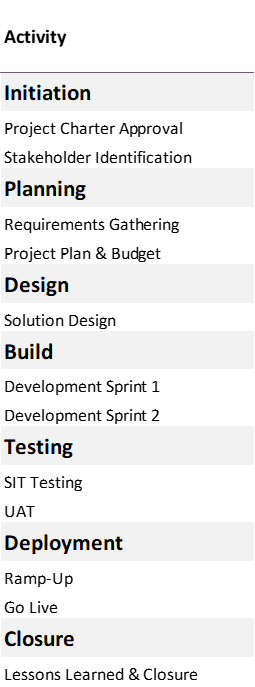
For each major step, you will of course have some smaller ones, and it is way easier to think about them like this, step-by-step and linked to the major stages, than all at once. Just take each phase and think about all the things you need to check in order to complete it. It won’t be perfect from the start, but that’s OK, and if you feel very unsure or need other opinions, you can always reach out to a more experienced project manager or use AI to help you cross-check it, run a quality audit on it (given the circumstances and what is needed, line of business, etc.), and see what you are missing or what should be improved.
The Iron Triangle of Constraints
It sounds like something right out of a dystopian movie, doesn’t it? In reality, this iron triangle is nothing more than scope, time, and resources. The balance between these three elements will make or break your entire project plan. Scope must be crystal clear and perfectly aligned with both time and available resources. Time is a critical element because everything you do in your project will be connected to it: delivery dates, development, testing, go-live… anything and everything in your plan must have the time element attached to it. Lastly, resources are the most vital component, since without them you can’t actually deliver. The project leader (or manager) must do this constant battle of trying to balance all these three aspects in order to achieve the best possible version of the project. It’s not easy, as a lot of the time you will hit stops, have change requests, unplanned leaves, and many other similar examples. The way to handle them will decide the outcome and the success of your project.
A very common mistake that people make is not understanding that pulling one corner will without a doubt stretch another. Since this is a “balance of all things” scenario, we must be realistic and keep this aspect in our minds all the time: you simply can’t deliver more without additional resources and time. Don’t be tempted to try and squeeze more scope with the available resources and timelines because you will not be able to – well, not how you planned it initially. When more scope is added without considering the other two, the major issue you risk is the quality of the delivery.
The trade-offs, since we are on this subject, should be made visible from the start. Everyone must be fully aligned here and not expect any miracles without more time and resources allocated. I say this because a lot of the time you will have senior managers or customers just stepping in and asking for more with limited time and resources, and that is just not possible. They might also want bigger changes in the project, or to revamp it or change aspects of this, and it is important to remember this: once you start out with a plan, stick with it. You can improve as you go ahead or make smaller changes that make sense, but major changes are not easy to do… just like that.
When communication becomes tired, boring, and without value
I can’t even count the number of project plans I saw across the years that have the most atrocious communication: tons of text, hundreds of emails, daily connects, boring meetings, repetitive files, unnecessary updates, and many other similar examples. Just so you know, if you ever reach one of these, it’s not looking good, mostly because people are no longer listening or reading the plan. Simply put: it’s just too much!
The best thing a project leader can do is to have that bottom line, the essence they want to communicate added up front, simple, efficient, and to everyone’s understanding. You don’t need to create very complicated, lengthy, and complex emails; a simple project plan with a status and next steps is perfect.
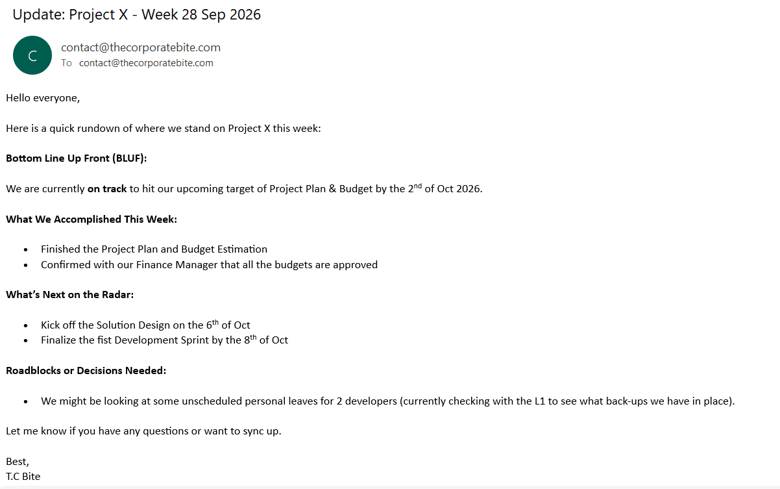
To avoid any complications, it’s always best to keep a single tracker with all the roadblocks. This way you can easily check what issues you are facing right now, how you are going to manage them, what the impact is, and any associated timelines and/or deadlines. Think of this as an issue tracker to help you locate, present, and report out all and any related complications with the project. It might seem like a lot, but if there’s one thing I’ve learned across the years, it is that organizational skills when working with a project are key to success. You simply cannot reach your goal without a good structure.
And on the topic of communication, one thing I noticed across my experience is the way people tend to provide the information says a lot about them. Many try to hide some less pleasant updates behind corporate fluff words or paperwork, or blame other departments for them. My advice to you is to keep it honest, simple, and human. When something is not working as planned, just say it; don’t try to sugarcoat it or blame it on someone else. Present things as they are and focus on finding solutions. It’s fine if things are not going exactly like the plan – in fact, it’s normal. When was the last time something you planned worked exactly like you planned it?
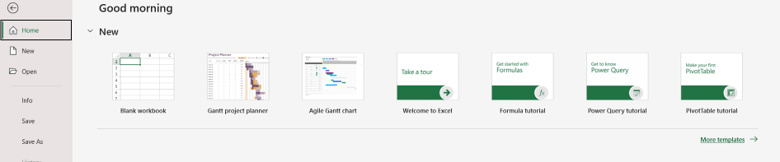
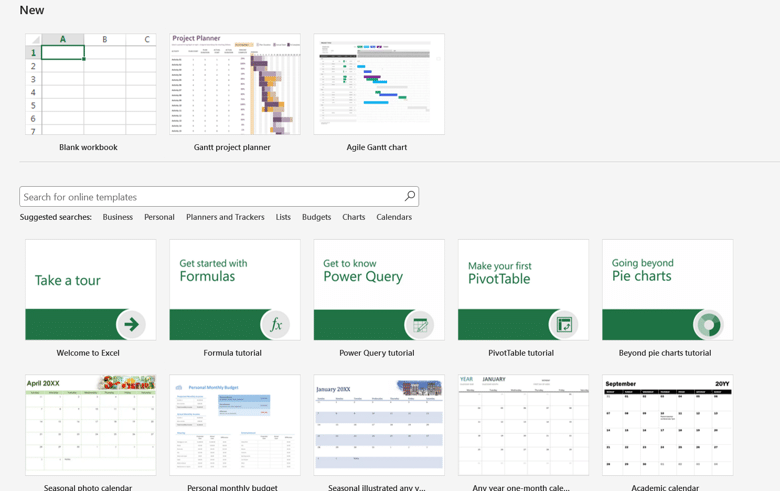
Let’s now see what a project plan should look like. I used the template available in Excel, and in case you didn’t know, you have a lot of them there. Just go to File and More Templates. There are literally tons of them for you to check out.
The one I made was a combination of the Excel Gantt project planner and some personal changes here and there. I started with capturing some basics: On Track and Delay color codes, adding the timelines in a format I like better, and making some updates to the columns (Start, Finish, Duration, Delays).
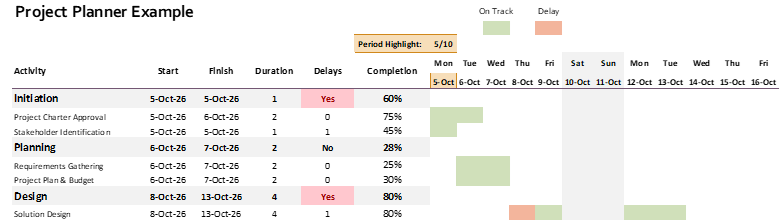
Any good project plan must include the following elements:
- Each major and minor step from your project, with timelines and duration
- Completion rate – to know how much of said step you have done
- Other information relevant to you: delays, stakeholders, etc.
In addition to this, make sure you are capturing the project in your Gantt chart; it’s a visual way to see the progress and/or timelines (perfect for a quick email update).
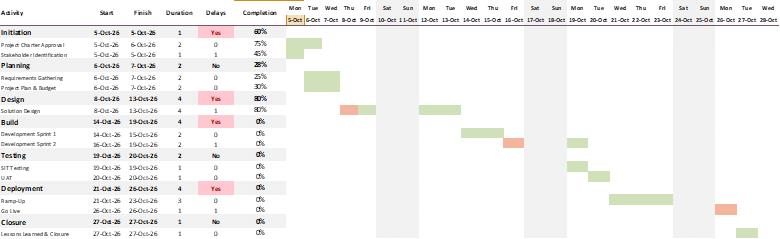
All that is left now is to follow the plan and make sure you manage any issues that show up.
Closing the project
A great project leader will always double-check the goal at the end and answer this question: did we deliver what we promised at the start? Make it a habit to always do this; it will keep you honest and humble. I see a lot of PMs that struggle with this, and instead of circling back to the initial promise, they get absorbed by each step and say things like, “Well, I delivered on each step, that was my job.” Remember, your job is not to treat this like a dedicated PM role; this is about you delivering a project for your team, but with a set of basic PM skills. This means you are responsible for that promise, not just for the delivery of each project step. Think of your role as less step-by-step and more holistic.
It always helps to take a minute and reflect on what went right and wrong. At times this can be a struggle, so I suggest giving this article a good read and checking out how you can manage a crazy timeline with multiple connects, meetings, and other disturbances: Calendar Defense 101: Triage for Overwhelmed Leads.
When you have a bit more clarity on those aspects, carry them forward and spread the learning – don’t keep it to yourself. If you can learn from them, others will as well. In the end, the growth is not just about you; it’s about everyone taking part in the plan.
Head up, courage, and a deep breath: if others can do it, so can you!
Until the next one, stay safe, healthy, and happy.