
Optimize

How do I visualize how work actually gets done vs. how it should get done?
Optimize

Current State vs. Future State Process Mapping

Process mapping deconstructs complex operational workflows into basic schematic symbols to clearly visualize your current “As Is” reality, identify bottlenecks like waiting times and manual steps, and eliminate low-value tasks, enabling first-time managers to establish streamlined “To Be” processes and execute smooth team transitions through small-scale pilot testing.


The Pareto Principle (8020 Rule) in Operations
Optimize

The Pareto Principle (80/20 Rule) in Operations

The Pareto Principle, or 80/20 Rule, helps operational managers isolate the vital few root causes behind the majority of daily issues by systematically gathering process data, sorting categories by impact, and building a cumulative chart – enabling focused, high-impact fixes, proper Root Cause Analysis, and long-term performance tracking while avoiding constant firefighting and keeping team momentum high through visible wins.

How do I brainstorm root causes when a problem has multiple drivers?
Optimize

Fishbone Diagrams (Ishikawa) for Complex Issues

By combining cross-functional expertise, open-ended problem statements, and the structured 6 Ms framework, first-time managers can use Fishbone diagrams to depersonalize root-cause analysis, separating surface-level symptoms from underlying system failures, while 5 Whys techniques, stakeholder voting, and Pareto analysis help pare down complex operational issues into vital, actionable priorities that ensure clear team ownership and measurable accountability.

Asking 5 Why until you reach the actual root cause
Optimize

Mastering the 5 Whys (And Knowing When to Stop)

The 5 Whys tool helps leaders solve problems by targeting underlying processes rather than surface symptoms or assigning blame. A great 5 Whys analysis shifts from reactive quick fixes to finding true root causes. By using objective data, involving team members, and focusing on controllable processes, you can turn insights into small, lasting fixes that build an open culture of learning from mistakes.

Optimize

The PDCA (Plan-Do-Check-Act) Cycle Explained

Most leaders default to massive, disruptive operational overhauls when trying to fix broken team processes – only to watch them fail. The Plan-Do-Check-Act (PDCA) cycle offers a low-risk alternative: testing small, controlled changes before rolling them out wide. Learn how this classic framework originated, why dragon-slaying hero complexes backfire in management, and how to run a simple pilot to improve your frontline operations without breaking daily workflow.

Optimize

5S for the First-Time Manager

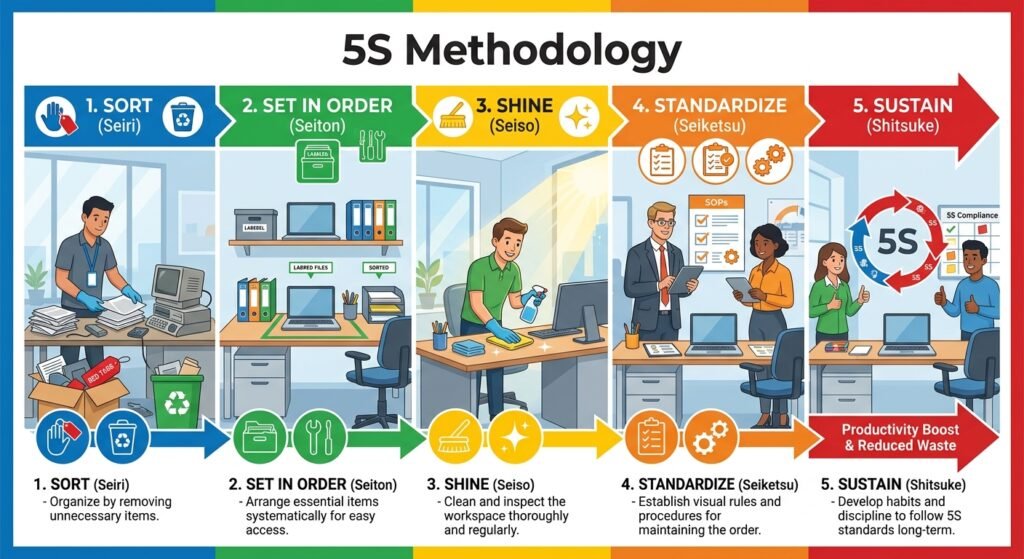
Working with digital chaos – from crowded inboxes to disorganized shared drives – quietly drains your productivity and makes spotting errors nearly impossible. In this guide for first-time managers, learn how to adapt Lean’s 5S methodology (Sort, Set in Order, Shine, Standardize, Sustain) to clear out digital clutter, set up visual workflows, and build an organized team culture without micromanaging.

Optimize

Value Add Activity: First-Time Manager Handbook

When you take over a team that has been running the same processes for years, it’s easy to inherit hidden waste and outdated routines. Learning how to spot Value-Add, Business Value-Add, and Pure Waste is the fastest way to lighten your team’s workload and streamline operations. Here is a practical guide to running the Customer Value Test, eliminating administrative noise, and turning Lean thinking into a daily leadership habit rather than a one-time project.

Optimize

8 Types of Waste in Operations: DOWNTIME

Operational waste isn’t just an inconvenience – it drags down productivity, fuels team stress, and erodes efficiency over time. Using the Lean Six Sigma DOWNTIME framework (Defects, Overproduction, Waiting, Non-Utilized Talent, Transportation, Inventory, Motion, and Extra-Processing), this guide shows first-time managers how to spot non-value-added work in daily operations and build practical habits to eliminate it.

What is a Root Cause Analysis (RCA) and how do I do it?
Optimize

Root Cause Analysis (RCA): The Starter Pack

The core idea of any successful root cause analysis is based on handling process escalations systematically across four key steps: gathering objective facts during initial due diligence, uncovering underlying issues using Root Cause Analysis tools like the 5 Whys or Fishbone Diagram, implementing immediate fixes and long-term safeguards through CAPA, and executing a clear action plan with tailored stakeholder communication.

Scroll to Top