
Making errors immediately obvious by using visual workflows
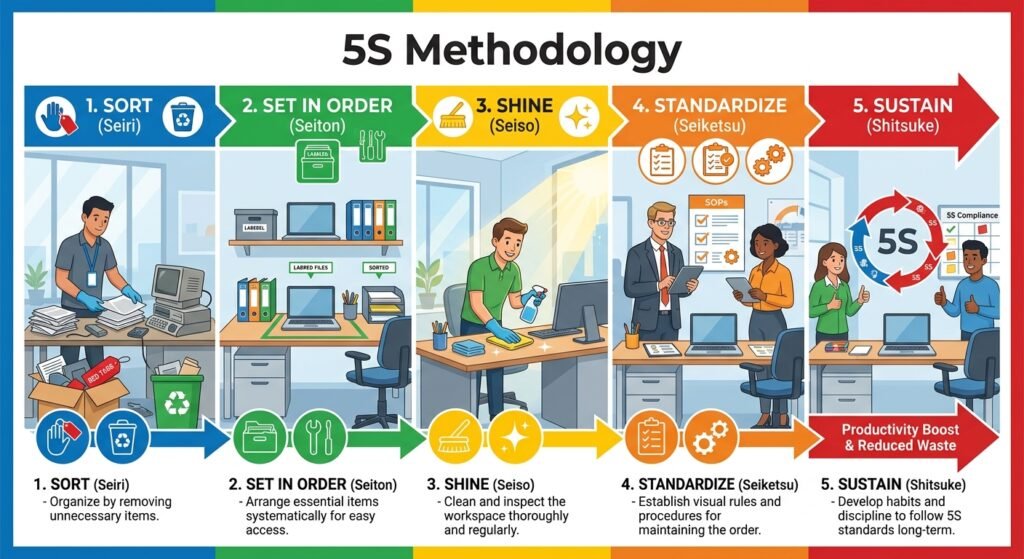
Ever saw one of those crazy Outlook inboxes with 3,500 emails, all in 1 folder? What about those messy desktops that are so overcrowded with folders, files, and other things that you can no longer tell what is what? Have you interacted with people that need at least 5 minutes to check in multiple places until they get whatever information they need?
Are you secretly one of those people?
If you are, hey listen: no shame here! But I must tell you, this is slowly killing your entire productivity.
With the changes in business across the last 15 years, a lot of our regular way of working has suffered a lot, mostly because we now process abnormal amounts of data. This in turn generates the need to look at and store more information than we used to 20 – 30 years back. Now every job has at least 100 Excel files per person, multiple emails, chats, SharePoints, and who knows what else. Because of this, the need to better organize has never been more in demand.
Working with so much chaos and/or lack of structure can impact everything we do: we can miss important emails (since our inbox has 10,000 of them), we can misplace files (as your desktop looks like some sort of crazy game screen), or we can – without knowing – add more waste to an already difficult process. Following the same logic, processes are also severely impacted by the lack of structure, making error spotting difficult.
In this article I want to talk to you guys about 5S, or how to use a simple framework to make errors so easy to spot that anyone can do it.
Here’s what we will be going over:
- Sort – clear out mental and digital clutter
- Set in Order – put everything in its logical home
- Shine – clean up and inspect daily
- Standardize – turn good habits into visual rules
- Sustain – keep the momentum going without micromanagement
Sort – clear out mental and digital clutter
5S is all about structure, and any good structure will start with its foundation. In this case, it is sort. Like the name suggests, we first need to do a bit of cleaning. Think of it as a very messy desk, with tons of things, some of which don’t even belong there.
A very common issue we have to deal with is the lack of proper cleanup when it comes to work. This is valid for both mental and digital.
Mental cleanup is all about the way you put your thoughts into motion, how you look at things for both the near and far future. For the first-time manager, it’s important to note that a great leader is someone that keeps a very clean mental overview of things. Not easy to do, of course; however, having, for example, too many struggles at once, or trying to carry out at least 4 tasks at the same time is not a good option. To help you achieve a bit of cleanup, here are some things I recommend to all new managers:
- The Morning Checklist: Before you start your day, do a quick mental check on what you need to do today. Check your emails, check your notes, and whatever meetings and/or pending tasks you have. Personal note: I always write them down; this way I know what goes where.
- The Priority Index: With all these things to do today, look at urgency, impact, and/or other aspects that might help you assess the priority. Based on that priority, you will start working on them, with the highest index ones first and the lowest index last.
- Stick to the PLAN: A lot of new-timers start out well, and then something happens by 11 AM and everything goes nuts. If you started with your plan, unless some major impact escalation appears, keep to it. Even in case of an emergency, prioritize whatever is “burning” in the moment and then return to your list.
For the digital cleanup, you need to do a bit of auditing. Start with the easy things: files, folders, SharePoints, emails, etc. Anything not used is no longer needed. Check your team as well from this point of view; you might have a slower reaction time from some people because they have complete chaos when it comes to files or emails. Help out by checking SharePoints and going over folders not used, different things that are no longer relevant and just create more visual noise, etc.
OUTLOOK Struggles: This one is my personal way of working; feel free to have whatever style you want, this is just something that works for me. I only keep in my actual inbox emails I need to respond to, nothing else. Everything goes in its own folder (or delete for those annoying corporate spams about things we really don’t need). This is something I pass on to my leadership team as well: have a clean inbox. This way nothing escapes the eye check.
EXCEL Struggles: I can’t tell you guys how many times I see people having complete chaos in their files. Having sheets that are not named, all data in one sheet, 10 Excel files for the same thing instead of one file with 10 sheets, pivots without names, tables without headers or proper naming, etc. All of these things can and WILL produce errors, no matter how much people think and/or say they won’t.
Set in Order – put everything in its logical home
This one is for those with OCD out there. The principle is very simple: everything must be put in its logical place. No need to have 10,000 emails in your inbox when you can actually create folders with a proper description and put each email in its own folder.
Why, you may ask? Because there’s no way you can prevent and/or spot errors if everything is everywhere all at once. When you have a clear structure, it’s much easier to spot things that do not belong there. This goes for everything you can possibly think of: dashboards, reports, templates, links, core tools, etc. A good practice if you want to go the extra mile is to have a sort of booklet with all the links, tools, contact people, emails, and whatever other information people might need. Review this every once in a while, and make sure people are using it.
A good rule of thumb for your team is this: when they need to find a file, spend less than 10 seconds locating it. As such, make sure in those SharePoints you have a good and logical structure: easy-to-follow folder names, clear and simple hierarchy, etc. Make it easy for them to find things; don’t add more waste by making them search for 5 minutes until they find something.
Shine – clean up and inspect daily
To make 5S work, you need to be a great housekeeper: clean up and inspect daily. You work with people, not machines, and because of this, things might get messy again. Make sure they are kept nice and clean.
Make it a habit to check desks, shared inboxes, drives, and whatever else you have to be 100% sure things are in order. For example, you can do a quick check 30 minutes before the end of the schedule. Yes, it’s more work for you, but it will help you avoid any issues that might appear because good old chaos has returned. And remember, just because you are organized doesn’t mean everyone in the team has to be. This is a habit that takes a lot of time to build, not a 1-week thing.
Use some sort of routine to check broken links, out-of-date procedures, templates that are no longer valid and/or working, and anything that people are using. Cleaning them up before they become a problem will help you eliminate potential errors. It’s just like your home: you don’t let dust accumulate for 3 weeks before using the vacuum; you use it with a frequency to avoid a dusty house.
Standardize – turn good habits into visual rules
As humans, we really like things to be simple, easy to follow, and identical: we love a good standard. This is valid for almost all aspects in our lives, so why would work be any different? Use this knowledge and apply it: each time you have something that can be standardized, do it. It can be that Excel file everyone is using, or that email people need to send to customers, or whatever approval they need to ask for.
People respond very well to visual guides (simple things that can explain whatever they need to do – you no longer need to create them yourself, you can just use AI if you’re lazy), color code as much as you can, but make sure you don’t transform things into one big rainbow (there’s also such a thing as too much), use simple naming conventions, etc. SIPOC is one such example: simple, efficient, and easy to follow.
Another aspect people might get lost in is overly complicated rules or procedures: unless absolutely necessary to be lengthy and detailed, keep things short and simple. This is why not everyone is a lawyer: too much information you must navigate and understand. Also, whatever information the team must access should be readable and very easy to understand. Less is more in this case.
Sustain – keep the momentum going without micromanagement
No improvement can be complete without sustain. The fact that you created a template doesn’t mean you can leave it there without ever touching it; you have to make sure it’s still good even after 6 months. If you don’t, errors start appearing because something is no longer good.
SOPs: The best example here, since Standard Operating Procedures are guides meant to help people do the job. If no one is checking those SOPs every 6 months or so, they might become out of date or no longer valid, thus increasing the risk of errors significantly. This is why most companies have a review process put in place (every 6 months recommended, or 1 time per year mandatory).
Sustain is all about doing quick checks, or low-stress tests, to make sure things are still working as they should and to see if they need any other corrections. It’s also about celebrating the small wins and showing your team what you can build together when each person contributes.
And with that said, you are now a 5S specialist. Congratulations, and use it to make your life and your team’s life easier.
Until the next article, stay happy, healthy, and safe!