
Process Improvement

Making errors immediately obvious by using visual workflows
Optimize

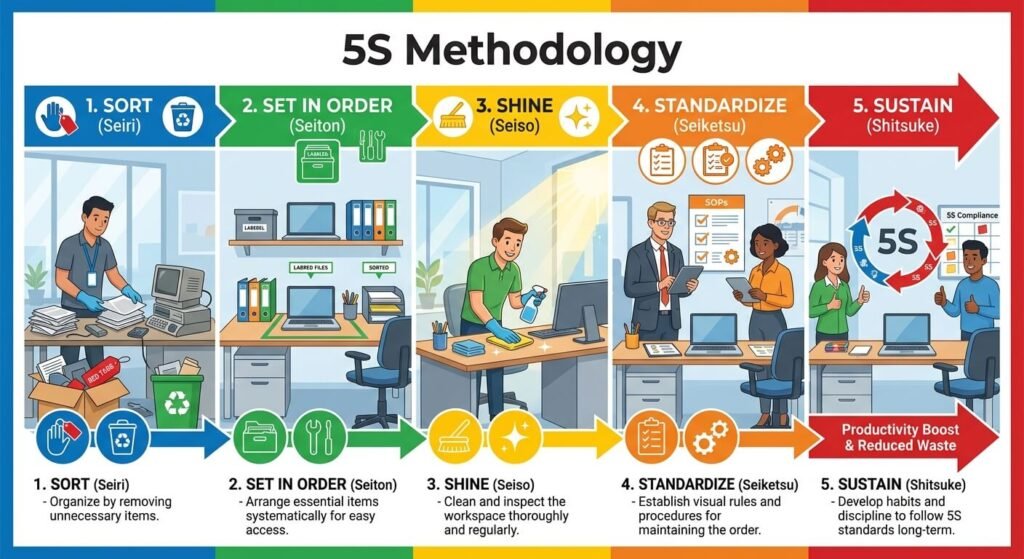
5S for the First-Time Manager

Working with digital chaos – from crowded inboxes to disorganized shared drives – quietly drains your productivity and makes spotting errors nearly impossible. In this guide for first-time managers, learn how to adapt Lean’s 5S methodology (Sort, Set in Order, Shine, Standardize, Sustain) to clear out digital clutter, set up visual workflows, and build an organized team culture without micromanaging.


How to spot and handle non-value-add work as a first-time manager
Optimize

8 Types of Waste in Operations: DOWNTIME

Operational waste isn’t just an inconvenience – it drags down productivity, fuels team stress, and erodes efficiency over time. Using the Lean Six Sigma DOWNTIME framework (Defects, Overproduction, Waiting, Non-Utilized Talent, Transportation, Inventory, Motion, and Extra-Processing), this guide shows first-time managers how to spot non-value-added work in daily operations and build practical habits to eliminate it.

How to make sense of all the data I am using as a first-time manager
Measure

Data Types: A Beginner’s Guide

Data doesn’t have to be intimidating. Discover how first-time managers can combine discrete, continuous, structured, and unstructured data to make informed operational decisions and drive team success without needing a statistics degree.

How to improve your process in small steps as a first-time manager
Optimize

Small Process Improvements: The Kaizen Way

Process improvement relies on adopting the Japanese concept of Kaizen – making small, consistent, incremental changes that compound over time – to reduce process risks, prevent team burnout, and build trust without causing initial disruption. By actively leading this culture, setting a personal example, incentivizing participation, quantifying the tangible impacts, and promoting results to upper management, operational leaders create efficient, high-performing teams.

Scroll to Top